



If you live with post-traumatic stress disorder or have experienced past trauma, even a routine dental appointment can feel overwhelming. Sedation dentistry for PTSD may help ease anxiety and make treatment more manageable when combined with clear communication, informed consent, and personalized care.
Dental visits can trigger stress through unfamiliar sounds, close contact, or feelings of losing control. Sedation may reduce anxiety, but it cannot prevent every trauma response. That is why a trauma-informed approach matters.
Combining sedation with consent-based dental care can help patients feel more comfortable while respecting their needs and preferences. Your dental team should explain procedures, discuss potential triggers, and establish communication methods before treatment begins, especially when sedation may affect your ability to respond.
Key Takeaways
- Sedation can ease the body's physical stress response, but consent and control have to come from clear communication, not medication alone.
- Certain dental visit triggers, like reclining, close contact, or a feeling of restraint, connect directly to common PTSD responses.
- A trauma-informed dentist will let you ask questions, set stop signals, and even schedule a first visit that involves no exam or treatment at all.
How Can Sedation Support Dental Treatment After Trauma?
Sedation dentistry uses medication to calm the nervous system during dental treatment, which can make it easier to tolerate sounds, sensations, and time in the chair. It does not erase memories or stop every trauma response, but it can reduce the physical symptoms that make those responses so overwhelming.
Dentists use several sedation medications depending on how much calming a patient needs. Conscious sedation keeps you awake and able to respond, while deep sedation brings you to a much lower level of awareness.
Research shows that Midazolam, often given through an IV, is commonly used because it can be adjusted in small amounts until the right level of calm is reached.
What Can Sedation Ease During an Appointment?
Sedation can lower a racing heartbeat, ease muscle tension, and reduce the mental loop of worry that builds before and during treatment. For some patients, it also softens the vivid alertness that comes with hypervigilance, a common PTSD symptom.
What it won't do is prevent every emotional reaction. A sound, smell, or position might still bring up a strong feeling even while sedated. This is why sedation works best as one part of a larger plan, not the whole plan.
Why Does Sedation Still Require Consent and Control?
Sedation may change your awareness and ability to communicate, which makes informed consent before treatment especially important. Your dental team should explain the planned procedures, discuss your preferences, and agree on communication methods before sedation begins.
This is especially important for trauma survivors, since a sense of control is often what feels most at risk in a dental setting. Research shows that treating patients with traumatic life experiences means building that consent into every step, not assuming it once sedation begins.
Which Dental Visit Triggers Are Specific to PTSD?
Certain parts of a routine dental visit can trigger a trauma response even when nothing is going wrong clinically. Recognizing these triggers ahead of time gives you and your dental team a chance to plan around them instead of being surprised by them.
A traumatic dental experience itself is one possible source, but dental trauma can also stem from experiences that have nothing to do with a dentist's office. Dental anxiety and dental phobia often overlap with PTSD symptoms, which means the body can react to a dental visit the same way it reacts to the original trauma.
How Can Reclining, Close Contact, or Feeling Restrained Trigger a Response?
Being tilted back in a chair, unable to see clearly, with someone standing close and working near your mouth, mirrors physical positions linked to past harm for some patients. This can trigger a fight, flight, or freeze response even when the dentist means no harm.
According to the research, torture survivors have described how specific positions and sensations during dental care echo past experiences of restraint. The body can react to the position itself, separate from anything the dentist is doing.
How Can Past Medical, Military, Abuse, or Dental Experiences Affect a Visit?
Past experiences in hospitals, combat zones, abusive relationships, or earlier dental chairs can all shape how your body responds in a new dental setting. The trigger is rarely about the current dentist. It is about what the setting reminds your nervous system of.
A study shows that survivors of child sexual abuse, for example, have described dental visits as uniquely difficult because of the physical closeness and loss of control involved. Avoiding dental care because of this kind of anxiety is common, and a closer look at avoidance patterns shows how untreated anxiety can lead to bigger oral health problems over time.
What Does Consent-Based, Trauma-Informed Dental Care Look Like?
Trauma-informed dental care means the dentist explains each step, asks permission before acting, and treats your control over the visit as just as important as your oral health. It does not require you to explain your trauma in detail for the care to work.
A trauma-informed dentist focuses on safety, predictability, and choice rather than asking you to relive specific memories. The goal is to understand that patients respond differently based on past experience, not to investigate what caused that response.
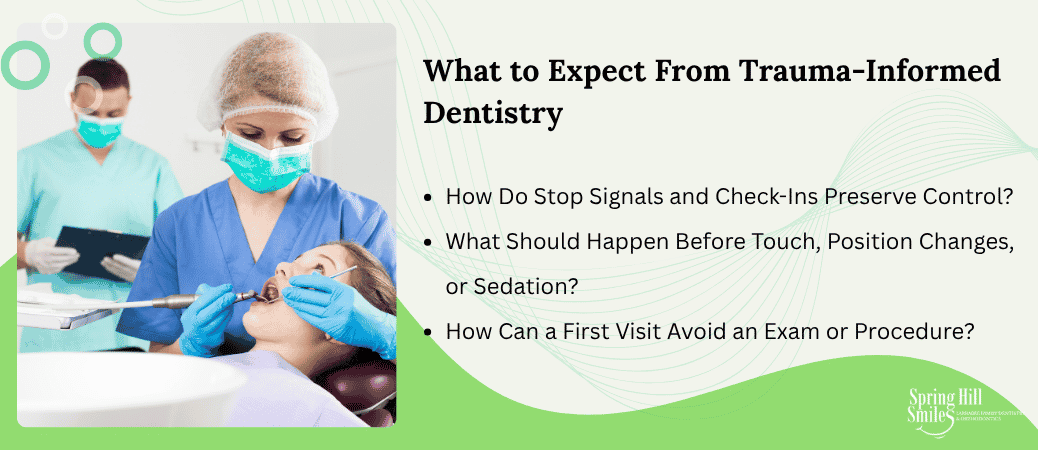
How Do Stop Signals and Check-Ins Preserve Control?
When a patient remains responsive, a hand signal agreed upon before treatment can provide a way to request a pause without speaking. For deeper sedation, the dental team must rely on the agreed treatment plan and appropriate monitoring because the patient may be unable to communicate.
Based on research, failing to honor that signal breaks trust immediately, so a trauma-informed dentist treats it as a firm rule, not a suggestion. Regular check-ins throughout treatment, even brief ones, reinforce that you are still the one in charge.
What Should Happen Before Touch, Position Changes, or Sedation?
A trauma-informed team asks before touching your face, adjusting the chair, or starting any sedation medication. This sounds small, but for many survivors, being told what is about to happen before it happens changes the entire experience.
This kind of communication protects oral health progress too, since patients who trust their dental team are more likely to keep coming back for routine care.
How Can a First Visit Avoid an Exam or Procedure?
Some dental practices may be able to arrange an initial consultation focused on discussing concerns and treatment preferences without performing an exam or procedure. Ask whether this option is available when scheduling.
This kind of visit can lower the stakes significantly for someone who has avoided dental care for years. It also gives the dentist a chance to learn your preferences and stop signals before any clinical work begins.
How Can You Plan a Safer First Appointment?
Planning ahead gives you more control before you ever sit in the chair. A short phone call, a written list of preferences, or a trial visit can all make the actual appointment feel less uncertain.
You do not need to describe your trauma in detail for a dentist to adjust how they work with you. You can instead describe specific triggers and preferences, which gives the team what they need without asking you to relive anything.
If IV sedation is part of your treatment plan, learning how to prepare for IV sedation dentistry can help you understand fasting instructions, transportation arrangements, and what to expect before your appointment.
What Can You Share Without Disclosing Your Trauma in Detail?
You can share concrete preferences like "please tell me before you touch my face" or "I need breaks every few minutes" without naming the event behind them. This kind of detail is often more useful to a dental team than a general label like PTSD, since it tells them exactly what to do differently.
Naming specific triggers, such as reclining too far back or a mask near your nose, also helps the team choose the right sedation option. A nasal mask used for nitrous oxide, for example, can itself feel distressing for some trauma survivors, something worth mentioning in advance.
When Might a Pre-Visit Appointment or Therapist-Supported Exposure Help?
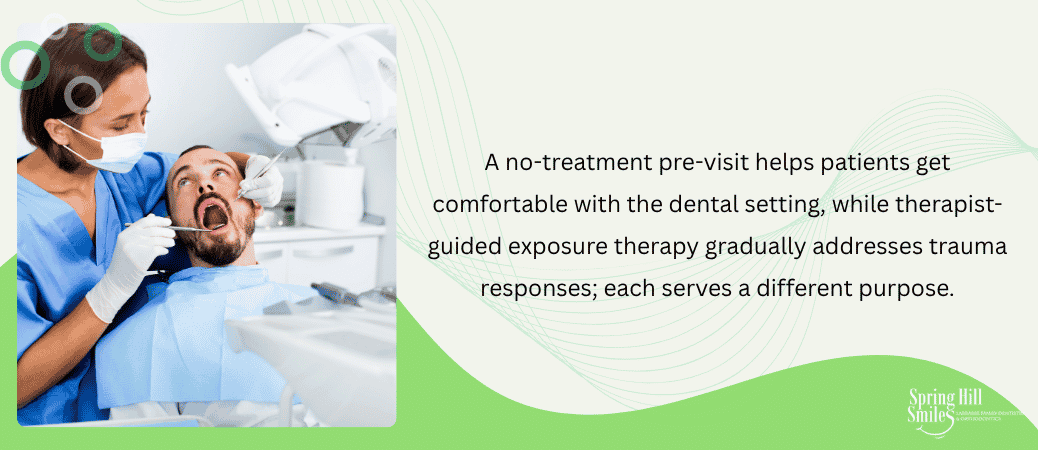
A pre-visit appointment, where you sit in the chair without treatment, can help your body get used to the setting before anything clinical happens. For some patients, especially those managing more severe trauma responses, working with a therapist on exposure therapy alongside dental visits can build tolerance gradually and safely.
These two approaches serve different purposes. A pre-visit appointment familiarizes you with one dentist's office, while therapist-guided exposure therapy addresses the trauma response itself over time. A dentist can support the first; only a mental health professional should guide the second.
What Should You Ask About Provider Training and Sedation Planning?
Ask directly whether the practice has staff trained in trauma-informed care and how they handle a request to pause mid-procedure. Ask what sedation options are available, including nitrous oxide, oral sedation, and IV sedation.
Understanding the differences between laughing gas and IV sedation can help you prepare questions about comfort, awareness, and communication once sedation begins.
A few sample questions worth asking:
- Has your team completed training in trauma-informed dental care?
- What happens if I use my stop signal during sedation?
- Can I schedule a visit that is conversation only, with no exam?
- How do you decide between nitrous oxide, oral sedation, and IV sedation for someone with a trauma history?
Dental Care That Respects Your Pace and Choices
Dental care should respect your preferences and informed consent. Sedation may help ease anxiety, while advance planning and clear communication allow you and your dental team to establish expectations for treatment, including how your comfort will be monitored.
At Spring Hill Smiles, patients can discuss their dental concerns, treatment preferences, and available sedation options before proceeding. Dr. Todd Larrabee, DDS, whose work includes sedation dentistry, can help evaluate which approach may be appropriate based on the patient's dental needs and medical history.
Frequently Asked Questions
Can I see a dentist for PTSD without explaining what happened to me?
Yes. You can describe specific triggers and preferences, like needing breaks or wanting to be told before any touch, without naming the event behind them. A trauma-informed dentist does not need the details of your trauma history to adjust how they work with you.
Will sedation prevent a PTSD trigger during dental treatment?
Sedation can lower physical stress symptoms like a racing heart, but it cannot guarantee that no trigger will occur. Combining sedation with clear communication and agreed stop signals gives you a more complete way to manage triggers if they come up.
Can I ask a dentist to stop after sedation has started?
Before sedation begins, discuss how you can communicate discomfort or request a pause. With lighter sedation, you may remain able to respond or use an agreed signal. With deeper sedation, communication may be limited, so informed consent, monitoring, and a clear treatment plan are especially important.
Can my first appointment be a conversation without an exam?
You can ask whether the dental practice offers a consultation-only first visit. Availability depends on the practice, but discussing your concerns before treatment can help you understand your options and prepare for a future appointment.
How do I find a dentist trained in trauma-informed care?
Ask directly whether the practice has completed training in trauma-informed care and how they handle requests to pause treatment. You can also ask about their experience with patients who have PTSD or past trauma, and whether they offer a conversation-only first visit.