

.png)
.png)
.png)
.png)

.png)
If you feel nervous about dental treatment, IV sedation can help you stay calm and relaxed during your visit. Many people choose sedation dentistry to manage dental anxiety and make longer procedures easier to handle.
To prepare for IV sedation dentistry, you need to follow your dentist’s instructions about eating and drinking, arrange a ride home, review your medications, and plan for rest after your appointment.
Simple steps like wearing comfortable clothes and clearing your schedule can make the day go smoothly.
When you know how to prepare for IV sedation dentistry, you feel more in control. A clear checklist helps you stay safe, avoid delays, and recover with fewer problems.
Key Takeaways
- Follow all eating, drinking, and medication instructions before your appointment.
- Plan for transportation and rest after IV sedation.
- Use a simple checklist to lower stress and support a smooth recovery.
Understanding IV Sedation in Dentistry
IV sedation helps you stay calm and comfortable during dental work. You stay relaxed while your dentist monitors you closely and adjusts medication as needed.
What Is IV Sedation and How Does It Work?
IV sedation in dentistry uses medication delivered through a small line placed in your arm or hand. The medicine goes straight into your bloodstream, so it works quickly and your dentist can adjust the level in real time.
You will not usually be fully asleep. Most patients feel deeply relaxed and may drift in and out of light sleep. Many remember little about the procedure.
Your dental team checks your health history, current medications, and allergies before treatment. During the visit, they monitor your oxygen level, heart rate, and blood pressure.
Because the medication is titrated slowly, your dentist can respond quickly if you become uncomfortable. This control makes IV sedation a strong option for longer or more complex procedures.
Comparing IV Sedation, Oral Sedation, and Nitrous Oxide
Not all dental sedation works the same way. The main options include IV sedation, oral sedation, and nitrous oxide (laughing gas).

With oral sedation, you take a pill before your appointment. It can reduce dental anxiety, but the effect is less predictable and cannot be adjusted once you swallow it.
Nitrous oxide, also called laughing gas, works quickly and wears off fast. You breathe it through a mask, and your dentist can adjust the level during treatment.
Common Reasons for Choosing IV Sedation
You may choose IV sedation if dental anxiety keeps you from getting care. Many people delay treatment for years because they fear pain, sounds, or loss of control.
IV sedation also helps during:
- Long procedures
- Multiple treatments in one visit
- Surgical procedures
- Strong gag reflex
- Difficulty getting numb
Because your dentist can adjust medication during treatment, IV sedation supports more complex care in fewer visits. This can reduce stress and save time.
A patient-focused overview of how IV sedation supports anxious or complex cases explains what to expect before, during, and after your appointment.
You still need someone to drive you home, and you should plan to rest afterward. Most patients feel drowsy for several hours but recover fully the same day.
Preparing for Your Sedation Appointment
You need to share clear health details, follow strict eating rules, and plan how you will stay calm before your sedation appointment. These steps help your dental team keep you safe and comfortable during IV sedation.
Pre-Appointment Consultation and Medical Disclosure
Before your sedation appointment, you will meet with your dentist to review your health history. This step decides if IV sedation is safe for you.
Tell your dentist about:
- Heart, lung, or breathing problems
- Sleep apnea
- Past reactions to anesthesia
- All medications and supplements
- Alcohol or recreational drug use
IV sedation drugs enter your bloodstream directly. Your dentist must know what you take to avoid harmful drug interactions.
Be honest and specific. Clear details protect you.
Fasting and Medication Instructions
Most patients must stop eating and drinking before IV sedation. Food in your stomach increases the risk of nausea or breathing problems.
Many offices require no food or drink for at least six hours before your appointment. Some instructions are stricter. The IV sedation pre-operative instructions state that you should not eat or drink for six hours and may only take small sips of water up to two hours before your visit.
Follow your dentist’s exact directions.
You may need to:
- Take regular medications with a small sip of water
- Pause certain drugs if your dentist approves
- Avoid alcohol the day before
Wear loose, comfortable clothes with short sleeves. Arrange a responsible adult to drive you home. You cannot drive after dental sedation, even if you feel alert.
Managing Dental Anxiety Before the Visit
It is normal to feel nervous about dental sedation. IV sedation helps reduce dental anxiety, but you can take steps to feel calmer before you arrive.
First, ask questions during your consultation. When you understand how IV sedation works, fear often decreases. Many patients feel sleepy and remember little of the procedure.
You can also:
- Practice slow breathing exercises
- Avoid caffeine the morning of your visit
- Plan a calm schedule with no rushed errands
If your anxiety is mild, your dentist may discuss oral sedation as another option. IV sedation provides deeper relaxation than oral sedation, which may suit patients with stronger fear.
Arrive early so you do not feel rushed. A calm start sets the tone for your entire sedation appointment.
What to Wear and Bring on the Day of Your Appointment
Dress in loose clothing, leave valuables at home, and plan for a simple, low-stress morning. Small details can make your sedation appointment smoother and safer.
Choosing Comfortable Clothing for Sedation
Wear comfortable clothing that feels soft and loose. Choose a short-sleeve or loose long-sleeve shirt so staff can place monitors and an IV line on your arm without trouble.
Avoid tight collars, fitted jackets, or stiff fabrics. You may feel sleepy after IV sedation, so you will want clothes that do not press or rub your skin.
Pick flat, closed-toe shoes with good grip. Do not wear high heels or sandals.
Simple layers work well. You might feel cool during the procedure, so bring a light sweater or hoodie that is easy to remove.
If you are receiving IV sedation, many offices suggest loose-fitting clothing with sleeves that roll up past the elbow.
Personal Items and What to Avoid
Bring a photo ID, your insurance card, and a list of your current medications. Include doses and how often you take them.
If you use oral sedation before your visit, confirm the timing with your dentist and arrange for a responsible adult to drive you. You should not drive yourself home after IV sedation.
Leave jewelry, watches, and contact lenses at home. Remove dentures, if instructed, before the procedure.
Do not wear:
- Lipstick or heavy makeup
- Nail polish or artificial nails
- Strong perfume or cologne
Avoid alcohol or recreational drugs for at least 72 hours before your appointment, since they can affect anesthesia. Many offices include this warning in their IV sedation safety guidelines.
Day-Of Hygiene and Routine Tips
Shower the morning of your sedation appointment. Use basic soap and skip scented lotions or body sprays.
Brush and floss your teeth unless your dentist tells you not to. If you must stop eating or drinking several hours before IV sedation, follow those instructions closely. Some offices require no food or drink for 6 to 8 hours before anesthesia.
Take regular medications only if your dentist or doctor approves. Use a small sip of water if allowed.
Arrive on time with your driver and plan to rest for the rest of the day. Keep your schedule clear so you can recover safely and comfortably.
Post-Sedation Care and Recovery
After IV sedation dentistry, your body needs time to clear the medication and regain full alertness. Careful supervision, rest, and simple safety steps help you recover without problems.
Immediate Aftercare and Supervision
You cannot drive yourself home after IV sedation. Arrange for a responsible adult to take you home and stay with you for several hours.
You may feel sleepy, unsteady, or confused. These effects are normal after IV sedation and can last most of the day. Some people also notice mild memory gaps about the procedure.
Plan to rest for the remainder of the day. Sit or lie down with your head slightly raised. Keep water nearby and take small sips once you feel fully awake.
Follow any written instructions your dentist gives you. Many clinics provide detailed IV sedation post-op instructions that explain how to handle eating, medications, and activity limits.
Do not:
- Drive or use public transport alone
- Sign legal documents
- Drink alcohol
- Take non-approved medications
These rules apply to both IV sedation and deeper forms of dental sedation.
Expected Side Effects and How to Manage Them
Most side effects are mild and fade within 12 to 24 hours.
You may notice:
- Drowsiness
- Dizziness
- Nausea
- Dry mouth
- Mild soreness at the IV site
Drowsiness is the most common effect. Take short naps if needed, but wake up every few hours to drink fluids.
If you feel nauseous, stick to bland foods like toast, soup, or crackers. Avoid greasy or spicy meals until your stomach feels normal.
Drink water often to help with dry mouth and hydration. If your arm feels sore where the IV was placed, use a cold compress for 10 to 15 minutes at a time.
Call your dental office if you have trouble breathing, repeated vomiting, heavy bleeding, or unusual confusion. These symptoms are rare but require quick care.
Returning to Normal Activities
Give yourself a full day to recover from IV sedation. Even if you feel alert, your reaction time may still be slow.
Most people return to normal activities the next day. If you also had oral sedation, recovery may feel similar but slightly shorter, depending on the dose.
Before you drive or go back to work, ask yourself:
- Do you feel clear-headed?
- Can you walk steadily?
- Are you fully awake without dizziness?
If the answer is yes to all three, you can usually resume regular tasks.
Avoid heavy exercise, lifting, or intense activity for at least 24 hours. Focus on rest, light meals, and following your dentist’s post-sedation care plan so your recovery stays smooth and predictable.
Other Dental Sedation Options and When to Consider Them
IV sedation works well for long or complex care, but it is not your only choice. You may benefit from oral sedation or nitrous oxide depending on your anxiety level, health history, and the length of your visit.
Oral Sedation: Overview and Use Cases
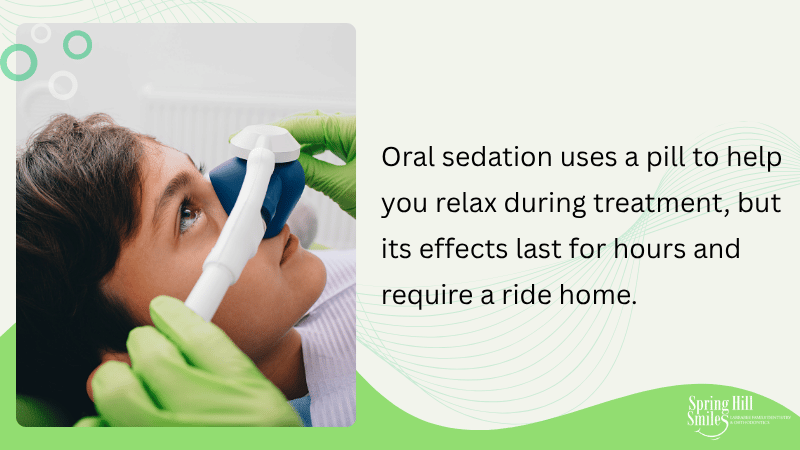
Oral sedation uses a prescription pill that you take before your appointment. Dentists often prescribe medications like diazepam to help you feel calm and drowsy.
You stay awake, but you may feel very relaxed. Many patients remember little about the procedure.
This option works well if you have moderate dental anxiety or need a longer visit. It also helps if you dislike needles, since you do not need an IV line.
Key points to know:
- You take the pill about 60–90 minutes before treatment
- The effects can last 4–6 hours
- You must arrange a ride home
- You should not return to work the same day
Unlike IV sedation, your dentist cannot adjust the dose once you swallow the pill.
Nitrous Oxide (Laughing Gas): Pros and Cons
Nitrous oxide, often called laughing gas, is a mild form of dental sedation. You breathe it through a small mask that sits over your nose.
It starts working within minutes. You feel calm, light, and less focused on the procedure.
Your dentist can adjust the level during treatment. Once the mask comes off, the effects fade in about 5–10 minutes.
Pros:
- Fast onset and fast recovery
- No needles
- You can usually drive yourself home
- Safe for many adults and children
Cons:
- Not strong enough for severe dental fear
- You must breathe through your nose
- It may not suit long or complex procedures
This option works best for short visits, cleanings, or mild anxiety.
Questions to Ask Your Dental Team
Before you choose any type of sedation dentistry, ask clear and direct questions. Your comfort and safety depend on good planning.
Consider asking:
- Which type of dental sedation fits my procedure?
- How long will the effects last?
- What medical conditions could limit my options?
- What should I eat or avoid before my visit?
- Will you monitor my heart rate and oxygen levels?
Also ask about recovery rules. For example, you may need to stop certain medications or avoid food for several hours before oral sedation or IV sedation.
Clear answers help you feel prepared. When you understand how oral sedation, nitrous oxide, or laughing gas works, you can choose the option that fits your needs and schedule.
Frequently Asked Questions
You need clear steps before, during, and after IV sedation. These answers explain how to prepare, what to avoid, and how to recover safely at home.
What should I do in the 24 hours before my IV sedation appointment?
Follow the instructions your dental team gives you. Do not drink alcohol for at least 24 hours before your visit. Avoid recreational drugs, and do not make major changes to your normal routine unless your dentist tells you to.
Confirm your ride home. Arrange for a responsible adult to stay with you after the procedure.
When do I need to stop eating and drinking before IV sedation?
Most dentists require you to stop eating solid food about 6 to 8 hours before your appointment. You may need to stop clear liquids about 2 hours before, but always follow your dentist’s exact instructions.
These fasting rules lower the risk of nausea or vomiting during sedation. Offices often review this during scheduling and in written pre-op instructions. If you eat or drink too close to your appointment time, your dentist may need to reschedule for safety.
Which medications and supplements should I tell my dentist about beforehand?
Tell your dentist about all prescription medications. Include over-the-counter drugs such as pain relievers, cold medicine, and sleep aids.
List any vitamins, herbal products, or supplements. Some herbal products can affect bleeding or interact with sedation medications.
Also share your full medical history. Conditions such as sleep apnea, heart disease, or breathing problems may affect your sedation plan.
What should I wear and bring with me on the day of my sedation visit?
Wear loose, short-sleeved clothing. This makes it easier for the team to place the IV and monitor your blood pressure.
Do not wear heavy makeup, nail polish, or contact lenses unless your dentist says it is fine. Leave jewelry at home.
Bring your photo ID, insurance card, and a list of your medications. Bring the responsible adult who will drive you home.
Do I need a responsible adult to drive me home and stay with me afterward?
Yes. You cannot drive yourself home after IV sedation.
Sedation affects your reflexes and judgment for several hours. You need a trusted adult to take you home and stay with you, especially during the first few hours after the procedure. Many dental practices require this as a safety rule.
What can I expect during recovery, and when is it safe to return to normal activities?
You will likely feel drowsy and slow for the rest of the day. Some people remember very little about the procedure.
Plan to rest at home. Do not drive, operate machinery, sign legal documents, or make major decisions for at least 24 hours.
Most people return to normal daily activities the next day, unless the dental procedure itself requires more healing time. Follow your dentist’s specific instructions for eating, pain control, and oral care.
.png)
.png)





.webp)