

.png)
.png)
.png)
.png)

.png)
If you feel nervous about a medical or dental procedure, you may wonder if IV sedation is safe at your age. You want comfort, but you also want to protect your health. That balance matters even more as you get older.
IV sedation is generally safe for older adults when trained professionals assess your health, adjust the dose, and monitor you closely. Doctors know that aging changes how your body handles medicine. They use lower doses and watch your breathing, heart rate, and blood pressure throughout the procedure.
You still need to consider your medical history, current medications, and any chronic conditions. When your care team reviews these details and plans carefully, IV sedation can help you stay calm and comfortable without adding unnecessary risk.
Key Takeaways
- IV sedation can be safe for older adults with proper evaluation and monitoring.
- Lower doses and careful oversight reduce the risk of side effects.
- Your health history and medications play a key role in safe sedation.
What Is IV Sedation and How Does It Work?
IV sedation helps you stay relaxed and comfortable during medical or dental care. It uses medication given through a vein, works quickly, and allows your care team to adjust the level of sedation as needed.
Defining Intravenous Sedation
IV sedation, also called intravenous sedation, involves giving sedative medicine directly into your bloodstream through a small tube placed in a vein, usually in your arm or hand. Because the drug enters your blood right away, it works within minutes.
You stay calm and drowsy, but you can still respond to simple instructions. Many people remember little or nothing about the procedure afterward.
Doctors and dentists often use IV sedation for minor surgeries and diagnostic tests. This method is safe and effective for many minor procedures.
Your care team monitors your breathing, heart rate, and blood pressure the entire time. This close monitoring is especially important for older adults.
How Conscious Sedation Differs From Other Sedation Methods
You may hear IV sedation called conscious sedation, which is one of several types of sedation options. This means you stay awake but deeply relaxed.
It differs from general anesthesia, which makes you fully unconscious. With general anesthesia, you cannot respond and may need help breathing. With conscious sedation, you usually breathe on your own.
Sedation can also be given by mouth or through a face mask. The Royal College of Anaesthetists explanation of sedation notes that IV medicine works faster and allows more precise control than oral options.
In sedation dentistry, IV sedation often provides a deeper level of relaxation than pills, making lengthy dental procedures comfortable. Your dentist can adjust the dose during the procedure, which helps keep you comfortable without going deeper than needed.
Typical Medications and Administration Process
Your provider places a thin IV line into your vein before the procedure starts. You may feel a small pinch, but the process is quick.
Common medications include drugs that reduce anxiety, cause drowsiness, and block pain. Some act quickly and wear off fast, which helps you recover sooner.
The level of sedation can range from mild relaxation to a deeper sleepy state. The ASA guide to IV monitored sedation explains that factors like your age, medical conditions, and overall health affect how your body responds.
Your care team adjusts the dose based on how you react. For older adults, providers often use lower doses because aging can change how your body processes medication.
Safety Considerations for Older Adults
IV sedation can be safe for you in later life, but it requires careful planning. Your care team must review your health, adjust medication doses, and monitor you closely during intravenous sedation.
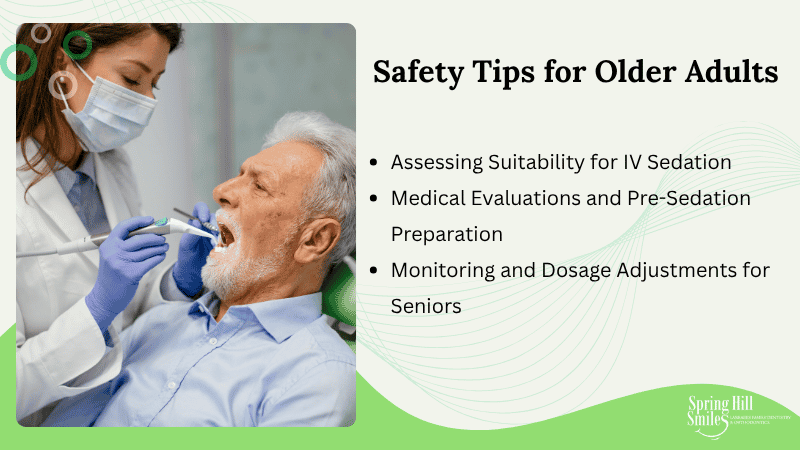
Assessing Suitability for IV Sedation
Before you receive IV sedation, your provider will decide if you are a good candidate. Age alone does not prevent you from having conscious sedation or dental sedation. Your overall health matters more.
Doctors look closely at heart disease, lung problems, kidney function, liver disease, and memory issues. These conditions can affect how your body handles sedative drugs. Older adults often process medications more slowly, which can increase the risk of side effects.
Research shows that procedural sedation in older adults is generally safe, but you may face a higher risk of oxygen desaturation. That means your oxygen level could drop during the procedure.
You also need to share a full list of medications. Blood thinners, blood pressure drugs, and sleep aids can interact with intravenous sedation. Clear and honest answers help your provider plan safely.
Medical Evaluations and Pre-Sedation Preparation
You should expect a detailed medical review before IV sedation. This may include a physical exam, lab tests, and questions about past reactions to anesthesia.
Providers follow careful pre-sedation steps because older adults are often seen as a higher-risk group for sedation. Studies note that elderly patients are perceived as high risk for procedural sedation, especially when certain drugs like propofol are used.
Your team may adjust your regular medications before the procedure. For example, they might change the timing of diabetes or blood pressure drugs.
You will likely receive instructions such as:
- Do not eat or drink for a set number of hours
- Arrange for someone to drive you home
- Bring a list of all medications and supplements
Following these steps lowers your risk of problems during dental sedation or other procedures.
Monitoring and Dosage Adjustments for Seniors
During IV sedation, your care team watches you closely. They monitor your heart rate, blood pressure, breathing, and oxygen levels the entire time.
Older adults usually need lower doses of sedative medications. Reviews of procedural sedation analgesia in the elderly patient stress that under-treating pain is not acceptable, but dosing must match your health status.
Your provider often starts with a small dose and increases it slowly. This method lowers the risk of confusion, low blood pressure, or breathing problems.
After the procedure, you stay under observation until you are alert and stable. You may feel sleepy for several hours, so plan to rest and avoid driving or making major decisions that day.
Benefits of IV Sedation for Senior Patients
IV sedation can make medical and dental care feel more manageable as you age. It can ease fear, lower physical stress, and help you complete needed treatment without delay.
Managing Dental Anxiety and Comfort
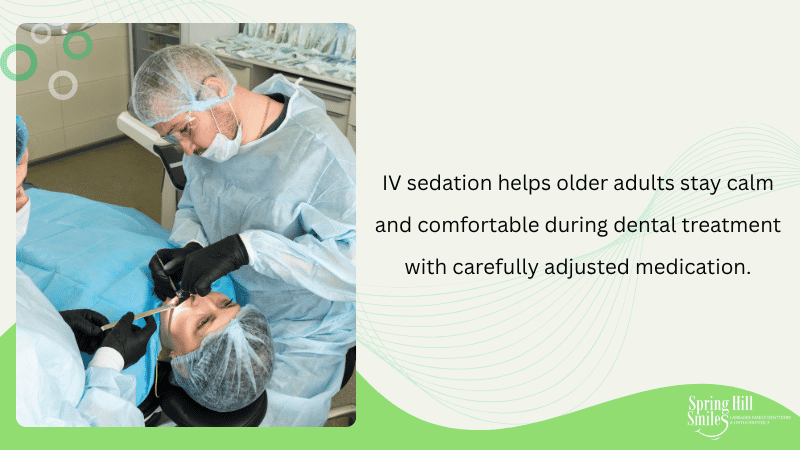
Many older adults avoid care because of fear, past trauma, or discomfort. With IV sedation, you stay deeply relaxed while your provider works. You remain responsive, but you may not remember much of the visit.
This approach is common in sedation dentistry, where comfort matters during longer or complex procedures. You do not feel sharp pain, and your body stays calmer during treatment.
As you get older, your body becomes more sensitive to medications. Doctors often use lower doses because older patients usually require less medication for safe procedural sedation in the elderly. This careful dosing helps reduce stress on your heart and lungs.
When anxiety drops, your blood pressure and breathing often stay more stable. That can lower the risk of sudden spikes caused by fear or pain.
Improving Access to Necessary Procedures
You may delay care if you worry about discomfort or feel overwhelmed by long appointments. IV sedation can help you complete treatment in one visit instead of several shorter ones.
This matters if you need dental surgery, dental implants, multiple fillings, wisdom tooth extraction, or imaging that requires you to stay still. When you feel relaxed, your provider can work more efficiently.
Research shows that procedural sedation is generally safe in older adults when clinicians follow standard precautions. Providers assess your health, review your medications, and monitor you closely during the procedure.
Key steps that support safety include:
- Reviewing heart and lung conditions
- Checking for drug interactions
- Using lower, individualized doses
- Continuous monitoring of oxygen and blood pressure
These steps make it more likely that you can receive the care you need without avoidable delays.
Supporting Recovery and Independence
Comfort during a procedure can affect how you feel afterward. When your body experiences less stress, you may have a smoother recovery.
Providers now focus on tailored plans for optimal sedation in older critically ill adults. They adjust medications to your age, weight, and medical history.
This personalized approach can help reduce confusion, breathing problems, and other side effects linked to higher doses. It also supports clearer thinking after the procedure.
When you recover well, you return to your normal routine faster. That means you can keep up with daily tasks, social time, and medical follow-ups without losing independence.
Potential Risks and Side Effects
IV sedation is usually safe for older adults, but your age can change how your body reacts to medication. You need to understand how physical changes, side effects, and proper safety steps all affect your experience.
Physiological Changes That Impact Sedation
As you age, your body processes drugs more slowly. Your liver and kidneys may not clear medication as fast, which can cause IV sedation drugs to last longer in your system.
You may also have reduced heart and lung reserve. This means your body may not respond as well to drops in blood pressure or oxygen levels during intravenous sedation.
Research on procedural sedation in older adults explains that aging changes drug distribution and increases sensitivity to sedatives. Even standard doses used for younger adults may be too strong for you.
You are also more likely to take multiple medications. These can interact with drugs used for conscious sedation or dental sedation, raising the risk of side effects.
Because of these factors, clinicians often start with lower doses and adjust slowly based on your response.
Possible Cognitive and Physical Side Effects
You may face a higher risk of oxygen desaturation during sedation. This means your blood oxygen level can drop if breathing slows.
Clinical reviews on procedural sedation analgesia in the elderly patient note that older adults are often seen as higher risk, especially if they have heart or lung disease.
Common side effects of IV sedation include:
- Low blood pressure
- Slow breathing
- Drowsiness that lasts longer than expected
- Nausea
- Confusion or short-term memory problems
You may also experience temporary delirium, especially if you already have mild memory issues. In some cases, confusion can last for hours or even days after intravenous sedation.
Physical weakness and poor balance after the procedure can increase your fall risk. This is especially important if you live alone.
Minimizing Complications With Good Practices
You can lower your risk by sharing a full medical history. Tell your provider about heart disease, lung problems, sleep apnea, diabetes, or past reactions to sedation.
Older adults often need smaller doses. Experts who discuss procedural sedation in the elderly highlight that slower metabolism and increased drug sensitivity call for careful dosing and close monitoring.
During IV sedation or dental sedation, your care team should monitor:
- Oxygen levels
- Heart rate
- Blood pressure
- Breathing rate
After the procedure, you should have a responsible adult stay with you. Avoid driving, making legal decisions, or taking new medications until the sedative fully wears off.
When your care team adjusts the plan to fit your age and health, conscious sedation can remain a safe option for many older adults.
Comparing IV Sedation to Other Dental Sedation Options
Different types of dental sedation affect your body in different ways. The right choice depends on your health, anxiety level, and the type of dental work you need.
IV Sedation vs. Oral Sedation
IV sedation goes directly into your bloodstream through a small line in your arm. Your dentist can adjust the level of sedation during the procedure. This allows close control, which matters if you have heart, lung, or blood pressure issues.
With IV sedation, you usually feel deeply relaxed and may not remember much of the visit. You will need someone to drive you home, and recovery can take several hours.
Oral sedation involves taking a pill before your appointment. Oral sedation helps you relax but does not allow real-time dose changes once you take the medication.
For older adults, this difference is important. If your medical condition requires careful monitoring, IV sedation may offer more control. Oral sedation may work well for mild to moderate anxiety and shorter procedures.
IV Sedation vs. Nitrous Oxide
Nitrous oxide, often called laughing gas, is a light form of dental sedation. You breathe it through a mask placed over your nose. It works quickly and wears off within minutes after the mask is removed.
IV sedation creates a deeper level of relaxation. You may feel sleepy and unaware of much of the procedure. Nitrous oxide keeps you awake and able to respond to questions.
Nitrous oxide has a short recovery time, while IV sedation requires more monitoring and a longer rest period afterward.
If you want to drive yourself home and return to normal activity the same day, nitrous oxide may fit your needs. If you need extensive dental work or have strong anxiety, IV sedation may provide better comfort.
Choosing the Right Level of Sedation

You and your dentist should review your full medical history before choosing any sedation dentistry option. Older adults often take multiple medications, which can affect how sedatives work.
IV sedation allows your dental team to monitor your vital signs and adjust the medication as needed. This can be helpful if you have heart disease, diabetes, or breathing problems.
However, IV sedation costs more and may require longer recovery. Oral sedation and nitrous oxide usually cost less and involve simpler monitoring.
Ask yourself:
- How anxious do you feel about dental treatment?
- How long and complex is the procedure?
- Do you have medical conditions that require close supervision?
Your answers can guide you and your dentist toward the safest and most comfortable choice for your care.
Frequently Asked Questions
Older adults can receive IV sedation safely when trained providers adjust the dose, review medical history, and monitor breathing and heart function closely. Your health conditions, medications, and recovery plan all play a direct role in safety.
What are the main risks of IV sedation for older adults, and how are they managed?
The main risks include slow breathing, low oxygen levels, low blood pressure, and confusion after the procedure. Older adults may also take longer to wake up.
Providers lower these risks by using smaller doses and giving the drug slowly. Research on procedural sedation in the elderly patient shows that aging changes how your body processes medication, so doctors space out doses and monitor you closely.
During the procedure, staff track your heart rate, blood pressure, and oxygen levels. Many clinics also use capnography, which measures how well you breathe in real time.
How do doctors decide whether an older patient is a good candidate for IV sedation?
Your doctor starts with a detailed health review. They look at your heart and lung health, past reactions to anesthesia, and current medications.
Patient selection is critical. Doctors ask if you are a safe candidate and what changes they must make to the usual sedation plan.
If your medical issues are stable and well managed, you can often receive IV sedation safely with dose adjustments.
Which medical conditions or medications can make IV sedation riskier for seniors?
Heart disease, lung disease, liver problems, and kidney disease can increase risk. These conditions may slow drug clearance or reduce your breathing reserve.
Medicines such as blood pressure drugs, opioids, sleep aids, and anti-anxiety drugs can interact with sedatives. Taking many medications at once, known as polypharmacy, raises the chance of side effects.
Benzodiazepines, a common sedative class, may cause confusion or falls in older adults if not dosed carefully.
How does IV sedation compare with general anesthesia for elderly patients?
IV sedation keeps you relaxed and sleepy, but you usually breathe on your own. General anesthesia makes you fully unconscious and often requires airway support.
For many dental and minor medical procedures, IV sedation places less strain on your heart and lungs than general anesthesia. It also often allows faster recovery.
Your doctor chooses the option that fits the length and type of procedure, along with your health status.
What pre-sedation tests or evaluations are usually recommended for older adults?
You can expect a full medical history and physical exam. Your provider may request blood tests, an electrocardiogram (EKG), or clearance from your primary doctor or cardiologist.
Age-related changes in metabolism and common medications affect how sedatives work. That is why providers adjust the plan before the procedure.
You may also receive instructions about fasting and which medications to take or skip on the day of treatment.
What should older adults and caregivers expect during recovery after IV sedation?
You may feel drowsy, unsteady, or mildly confused for several hours. Some older adults take longer than younger adults to return to normal alertness.
You will need someone to drive you home and stay with you for the first 24 hours. Avoid driving, signing legal papers, or making major decisions during that time.
Most people resume normal activities the next day, unless your doctor gives different instructions based on your health or the procedure performed.
.png)
.png)





.webp)