

.png)
.png)
.png)
.png)

.png)
If you grew up with silver fillings, you may have noticed one of them looking darker than it used to, or felt a rough edge when your tongue passes over a back tooth. That change alone rarely means trouble. Metal fillings darken with age the way an old spoon does, and a stable filling that still seals the tooth can keep working for years.
What deserves attention is the tooth around the filling. A cracked, leaking, or painful restoration needs a prompt look, while a dark but sealed filling can often be watched at your regular checkups. Old metal fillings can crack teeth or turn dark for very different reasons, and only an exam can tell which one you are dealing with.
Silver (amalgam) fillings have protected teeth for decades, and many can last for years. If you're wondering when to replace metal fillings, the decision usually depends on their condition rather than their age alone. Food catching in a new spot, sensitivity to cold, pain when biting, or a damaged edge can all be reasons to have an old filling checked.
Key Takeaways
- Pain when biting, new temperature sensitivity, or a rough or chipped edge are the signals worth having checked soon.
- A dark filling is not automatically a cavity, but gaps at the edges let bacteria slip underneath where you cannot see them.
- Catching a failing filling early usually means a smaller repair and more of your natural tooth saved.
When a Dark or Cracked Filling Needs Prompt Attention
A cracked silver filling that hurts when you chew, or a tooth that suddenly reacts to hot and cold, belongs on the schedule soon rather than at your next cleaning. Old fillings that stay quiet and smooth are a different situation, and your dentist can simply keep an eye on them.

Pain When Biting or Chewing
Pain when biting is one of the more telling signs, especially when it shows up as a sharp zing the moment you release the bite instead of when you press down. That release pain often points to a crack in the tooth flexing open and closed under pressure.
A cracked metal filling can produce the same feeling. If chewing on one side has become something you avoid without thinking about it, mention that at your visit. Say which tooth, which foods, and whether the pain lingers.
New Sensitivity to Hot or Cold
Sensitivity to hot or cold in a tooth that was comfortable for years suggests the seal around the filling has changed. Temperature travels through a gap far more easily than through healthy enamel.
Brief sensitivity that quickly fades may be less concerning than pain that continues after the hot or cold stimulus is gone. Lingering or worsening sensitivity is worth having checked by your dentist.
A Rough, Loose, or Chipped Edge
Run your tongue over the tooth. A ledge, a sharp corner, or a spot where floss shreds every time tells you the margin has broken down.
A filling that feels loose or moves at all needs attention right away. So does a piece of tooth or filling that has visibly chipped away, since the exposed area is now open to bacteria.
Dark Lines, Staining, and Food Traps
Dark staining spreading from the edge of an old filling into the surrounding tooth can signal leakage, and a spot where food packs in after every meal often marks the same weak point. Both are reasons to have the tooth examined.
That said, a uniform gray shadow around a metal filling is frequently just the metal showing through thin enamel.
Why Old Metal Fillings Can Crack Teeth or Turn Dark
Amalgam is strong, but it behaves differently from tooth structure under heat, cold, and daily chewing force. Over 15 or 20 years, that difference can open microscopic gaps where a cavity starts out of sight.
Temperature Changes and Repeated Chewing Pressure
Like natural teeth, older metal fillings are exposed to repeated temperature changes and chewing forces over many years. As the filling and surrounding tooth age, wear, cracks, or small gaps may develop, particularly around large restorations where less natural tooth structure remains.
Add thousands of chewing cycles and you get stress fractures, either in the filling or in the tooth walls around it. Large old fillings on molars carry the highest risk because less natural tooth is left to absorb the force.
Why a Dark Filling Is Not Always a Cavity
Amalgam tarnishes. Silver-based metals corrode on the surface and darken, and that dark color can shine through the thin enamel beside the filling, giving the whole area a gray cast.
Your dentist distinguishes surface tarnish from a problem by checking whether the margin still feels sealed, whether the shadow shows up on an X-ray, and whether the tooth has any symptoms. Color by itself is a cosmetic matter, and plenty of patients address it through cosmetic dentistry when they are ready.
How Gaps Lead to Hidden Decay
Recurrent decay simply means a new cavity forming at the edge of an existing filling. Bacteria and food particles slip into a gap too small to see, and they are protected there from your toothbrush.
This is why early detection at routine visits matters for a tooth you cannot inspect yourself. A family dentist trained in early detection of tooth decay will check those margins at every exam, because hidden decay often causes no pain until it reaches the nerve.
How Dentists Decide Whether a Filling Should Be Replaced
Filling replacement is recommended when the seal has failed, decay has returned, or the tooth is cracking, not because the filling has a birthday. Every replacement removes a little more natural tooth structure, so a good dentist weighs that cost carefully.
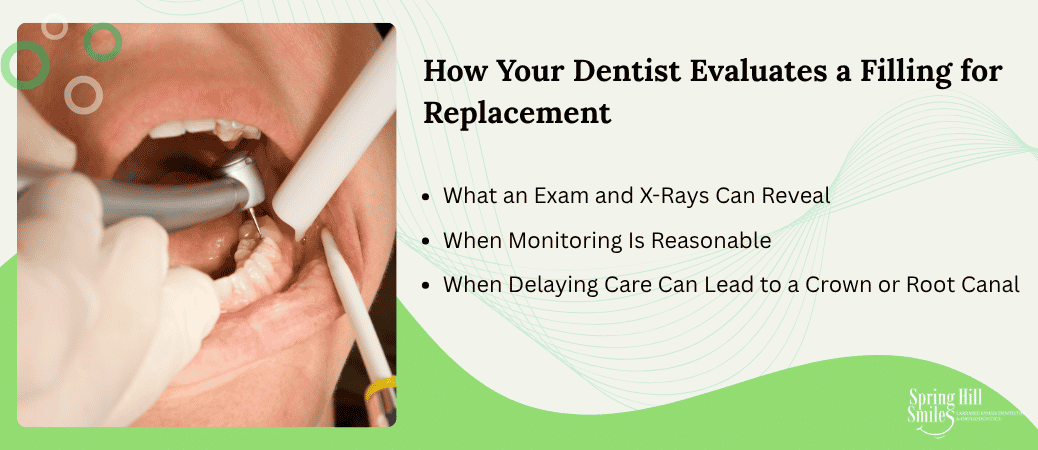
What an Exam and X-Rays Can Reveal
A dental explorer catching on the margin, a shadow on a bitewing X-ray under the filling, or a tooth that hurts on a bite stick all point toward a failing restoration. Bitewing X-rays are especially useful because they show the area between teeth and beneath the metal.
Some offices also use transillumination, shining a bright light through the tooth so cracks stand out as dark lines. Your dentist may test with cold to see how the nerve responds.
When Monitoring Is Reasonable
Leaving a filling alone is often the right call. If the margins are tight, the X-ray is clear, and you have no symptoms, replacement may remove healthy tooth structure unnecessarily. With modern dental technology, your dentist can evaluate and monitor the tooth over time. Photos and X-rays can also help track changes from one visit to the next.
When Delaying Care Can Lead to a Crown or Root Canal
Waiting has a cost. Decay under a filling grows toward the nerve, and once it reaches that point, a simple replacement turns into root canal treatment plus a crown.
A tooth that cracks all the way to the root can become unrestorable. Addressing a small margin defect early keeps you in filling territory instead of moving into full mouth reconstruction territory years down the road.
Replacement Options That Protect the Tooth and Smile
Once a filling has to come out, the goal is choosing the smallest restoration that will hold up under your bite. Small to medium cavities do well with composite fillings; large ones with weakened walls often need the extra support of an inlay, onlay, or crown.
Tooth-Colored Composite Fillings
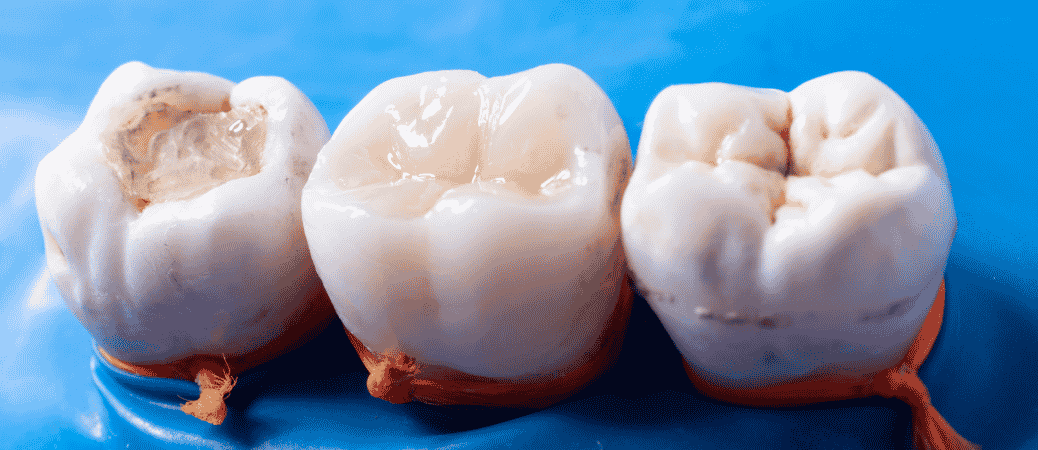
Composite fillings are made of resin and bond directly to the tooth, so they need less drilling to hold in place. They match your enamel shade and give you a natural-looking smile with no gray patch showing when you laugh.
Composite works best for small and medium repairs. On a heavily loaded molar, your dentist will talk through whether it can carry the chewing load long term.
When Inlays or Onlays Offer Better Support
Inlays and onlays are custom-made restorations, usually porcelain, that are bonded into a prepared tooth. An inlay sits within the cusps; an onlay covers one or more cusps that are too thin to survive on their own.
They preserve more tooth than a full crown while offering more strength than a large filling. When a tooth needs full coverage, same-day crown technology can complete the restoration in one visit.
What Happens During Filling Replacement
Here is the usual sequence:
- Local anesthetic numbs the tooth so you feel pressure but no pain.
- The old metal filling is sectioned and lifted out, often with high-volume suction and rubber dam isolation.
- Any decay underneath is removed and the tooth is checked for cracks.
- The new restoration is placed, cured, and shaped, then your bite is adjusted until it feels even.
Treatment time depends on the size and condition of the existing filling and whether additional decay or cracks are found. Mild cold sensitivity for a few days afterward is normal and settles on its own. If dental visits make you tense, ask about sedation dentistry beforehand.
Addressing a Failing Filling Early Preserves More of Your Tooth
At Spring Hill Smiles, we focus on checking the condition of both the filling and the natural tooth around it before recommending replacement. A dark old amalgam filling does not automatically need to come out. What matters is whether it still seals the tooth properly and whether the surrounding tooth remains healthy.
Pain on biting, new temperature sensitivity, a rough or loose edge, and food packing into one spot are the signals worth acting on. A stable, symptom-free filling can be photographed, X-rayed, and watched.
Bring specifics to your next visit: which tooth, what triggers the discomfort, and how long it lasts. That detail helps your dentist choose the most conservative repair, which is the one that leaves the most natural tooth behind.
Frequently Asked Questions
Do dark silver fillings always need to be replaced?
No. Amalgam darkens with age through normal surface tarnish, and that color change alone does not mean the tooth is failing. Replacement is warranted when the seal is broken, decay is present, or the tooth is cracking.
Can a cracked metal filling cause pain when chewing?
Yes, and the pain often appears as a sharp jolt when you release your bite rather than when you press down. That pattern suggests a crack flexing under pressure. Have it examined before the crack extends further into the tooth.
How does a dentist find decay under an old filling?
Bitewing X-rays show shadows beneath and between fillings, and an explorer catches on margins that have opened up. Some dentists add transillumination, which shines light through the tooth to reveal cracks and dark areas.
Is it safe to replace amalgam fillings with tooth-colored fillings?
Yes. Composite fillings bond to the tooth, blend with your enamel, and are placed with standard isolation techniques such as a rubber dam and high-volume suction during removal. Your dentist will confirm the tooth is a good candidate based on the size and location of the repair.
Will I need a crown or root canal after replacing an old filling?
Not usually, though it becomes more likely when decay has reached deep or the tooth has lost several walls. If the nerve is inflamed, root canal treatment plus a crown may be recommended. Catching the problem while it is still small keeps most teeth in filling or onlay range.
.png)
.png)





.webp)