
.png)
.png)
.png)
.png)
.png)

You may notice small tooth-colored bumps on your teeth during Invisalign treatment and wonder why they are there. Invisalign attachments may look minor, but they play a big role in how your clear aligners move your teeth.
Invisalign attachments give your clear aligners a better grip, which helps guide specific teeth into the right position more effectively. Your orthodontist places these small shapes on certain teeth so the aligners can apply steady, focused pressure where you need it most.
If you want to know why some people need attachments and others do not, and what it feels like to live with them, you will find clear answers ahead. In this guide, invisalign attachments is explained, alongwith how they are placed, how long you wear them, and what happens when your treatment ends.
Key Takeaways
- Attachments help clear aligners move teeth with more control and precision.
- Your orthodontist bonds and removes them safely during Invisalign treatment.
- You can eat, brush, and live normally with a few small adjustments.
What Are Invisalign Attachments?
Invisalign attachments are small shapes your orthodontist bonds to certain teeth to help your aligners move them with more control. These tooth-colored bumps give the trays extra grip so they can push, pull, or rotate teeth in ways smooth plastic alone cannot.
Tooth-Colored Bumps and Their Material
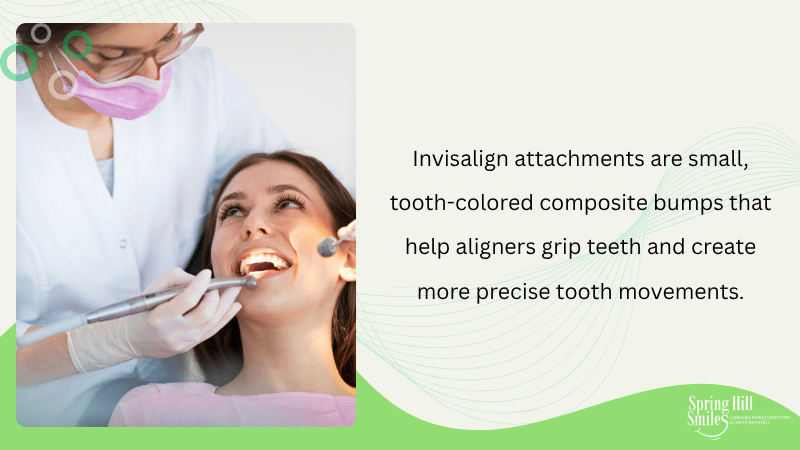
You can think of Invisalign attachments as tiny handles placed on your teeth. They are small, raised tooth-colored bumps that blend in with your enamel.
Your orthodontist makes them from a strong dental composite, the same type of material used for tooth-colored fillings. This composite bonds directly to the front or side of your tooth. It hardens under a special curing light.
Each attachment has a specific shape and size. Some look square, others look more rectangular or beveled. The shape depends on the type of tooth movement you need, such as rotation or pulling a tooth down into place.
Unlike brackets on braces, these bumps do not connect to wires. They simply help your clear aligners fit tighter and apply steady pressure in the right direction.
If you want a deeper look at how they function, this guide on Invisalign attachments explained shows how they improve tooth movement.
SmartForce Attachments vs. Invisalign Buttons
You may hear different names during treatment. SmartForce attachments and Invisalign buttons often mean similar things, but they are not always identical.
SmartForce attachments are custom-designed shapes planned in your digital treatment scan. Invisalign software decides where they go and what shape they need. These shapes help control specific movements, like tilting or rotating a tooth.
Invisalign buttons, on the other hand, may sometimes refer to small round bumps used with rubber bands. Your orthodontist may attach elastics to these buttons to fix bite issues.
Both types act as anchors. They give your aligners more grip and control than smooth trays alone. You can read more about the role of Invisalign attachments and buttons in tooth movement and bite correction.
Placement and Visibility
Your orthodontist places attachments during a short office visit. The process often takes about 30 minutes.
They clean and dry your teeth first. Then they use a clear template tray to position the composite material exactly where it needs to go. A curing light hardens the material in seconds.
Most attachments stay on for the full length of your Invisalign treatment. When treatment ends, your orthodontist gently removes them and polishes your teeth.
Because they match your tooth color, most people will not notice them during normal conversation. Attachments on front teeth may be more visible than those on back teeth.
You may feel mild soreness after placement. This discomfort usually fades within a few days as your teeth adjust to the new pressure.
How Attachments Enhance Invisalign Treatment
Attachments give your clear aligners more control over how your teeth move. They improve aligner grip, support precise movements, and help your Invisalign treatment plan stay on track.
Role in Complex Tooth Movements
Clear aligners can handle many simple shifts on their own. But some movements need extra help.
Attachments allow vertical movement, tooth rotation, and root control. For example, if your tooth needs to move up or down in the gum line, the aligner needs a firm surface to push against. Small composite bumps act like handles, so the aligner can guide that motion more accurately.
They also help with stubborn teeth that resist turning. Attachments act as anchors that give aligners better control over specific teeth.
This added control reduces the chance that teeth lag behind the digital plan. It also lowers the need for mid-treatment changes when movements do not track as expected.
Enhancing Aligner Grip and Fit
Aligners must fit tightly to move teeth well. Attachments improve aligner grip by giving the plastic trays something solid to press against.
Without attachments, aligners rely only on surface contact. That can limit force on smooth or rounded teeth. With attachments in place, your aligners snap in more securely and apply steady pressure in the right direction.
The Invisalign attachments process shows how your orthodontist uses a template aligner to place each attachment in a precise spot. This step matches the digital Invisalign treatment plan.
Better grip means fewer gaps between the tray and your teeth. When your aligners fit well, they can move teeth more predictably and with fewer delays.
Treatment Customization and Efficiency
Your orthodontist does not place attachments at random. Each one supports a specific step in your Invisalign treatment plan.
Software maps out where teeth need extra force. Attachments then get bonded in those exact spots using a template aligner. This level of planning turns standard clear aligners into a more customized system.
The benefits of Invisalign attachments include:
- More precise force on targeted teeth
- Improved tracking with each new aligner
- Fewer refinements at the end of treatment
Refinements mean extra aligners to fix teeth that did not move as planned. By improving control from the start, attachments can reduce how often you need them.
When used correctly, attachments help your treatment stay efficient and focused on clear, step-by-step tooth movement.
Reasons and Scenarios for Using Attachments
Your aligners need a firm grip to move certain teeth in specific ways. Invisalign attachments give your trays extra control, especially for movements that clear plastic alone cannot handle well.
Types of Needed Tooth Movements
Some tooth movements are simple, like mild crowding or small gaps. In those cases, your trays may work without extra help.
Other movements need more force and direction. Vertical movement, such as pulling a tooth down or pushing it up, often requires Invisalign attachments. The small bumps give the aligner something to push against.
You may also need attachments for:
- Rotating rounded teeth like canines or premolars
- Moving a tooth backward into space
- Correcting bite issues, such as a deep bite
- Shifting teeth that are tilted at an angle
Clear aligners are smooth and flexible. Attachments act like handles. These small shapes help the aligners apply steady pressure to specific teeth. That pressure guides complex movements with better control.
Do All Patients Require Attachments?
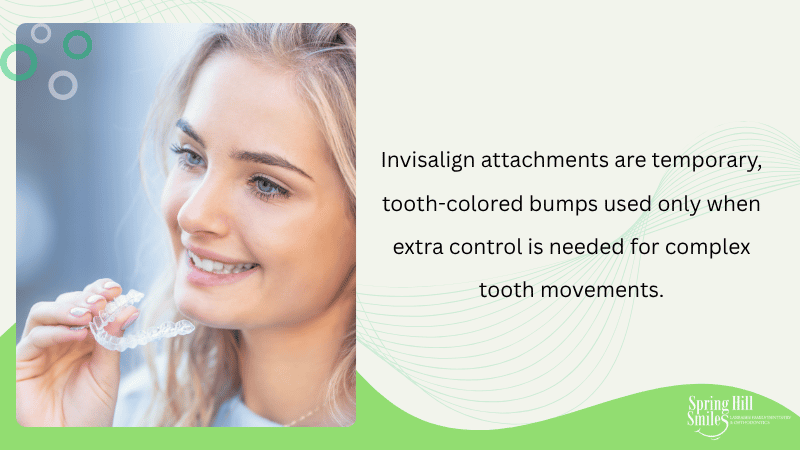
Not all Invisalign patients need attachments. It depends on how much your teeth must move.
If you have minor spacing or mild crowding, your provider may skip attachments. Simple shifts often respond well to aligners alone.
However, many Invisalign treatment plans include at least a few attachments. More complex cases, such as bite correction or significant rotation, usually need them. The aligner must grip certain teeth firmly to move them in precise directions.
Attachments are common and temporary. Your provider removes them at the end of treatment. They are tooth colored and blend in, though you may notice them more on front teeth.
Your orthodontist decides based on your digital treatment plan, not guesswork.
Attachment Placement Planning
Your provider plans attachment placement before you start wearing trays. They use a 3D digital scan of your teeth to map out each step.
The software shows:
- Which teeth need extra force
- The direction of each movement
- The shape and size of each attachment
Many systems use small, custom shapes designed for specific forces. Invisalign calls these SmartForce attachments, which bond to selected teeth in exact positions.
Placement is not random. Your provider chooses the tooth surface and angle that give the aligner the best grip. During your appointment, they bond the attachments using a template tray so each one sits in the right spot.
Careful planning helps your Invisalign treatment stay on schedule and reduces the need for extra refinements later.
The Process: Application, Adjustment, and Removal
Your orthodontist places, checks, and removes attachments using a simple bonding process. You may also need a quick repair if an attachment falls off during your Invisalign treatment.
Step-by-Step Attachment Placement
Your orthodontist starts by reviewing your digital treatment plan. This plan shows exactly where each attachment should go to guide tooth movement.
They clean and dry your teeth so the bonding material sticks well. Clean enamel helps the attachment stay secure.
Next, your orthodontist uses a template aligner. This tray looks similar to your regular aligner, but it has small spaces for each attachment.
They place dental composite into those spaces. Then they fit the template aligner over your teeth and press gently.
A special curing light hardens the composite in seconds. Once the material sets, your orthodontist removes the template and smooths away any extra resin.
The visit usually takes about 30 minutes. You may feel mild pressure after placement, but this often fades within a few days.
What to Do if an Attachment Falls Off
Attachments can loosen if you bite hard foods or use your teeth to open things. Poor aligner removal technique can also cause attachments to fall off.
If an attachment falls off, do not panic. Keep wearing your aligners unless your orthodontist tells you otherwise.
Call your orthodontist and schedule a repair visit. The office will usually replace it quickly using the same bonding method.
To reduce the risk that attachments fall off:
- Remove aligners slowly using your fingers, not sharp tools
- Avoid biting ice, hard candy, or non-food items
- Brush and floss daily to keep the bond strong
Invisalign notes that attachments can come loose and advises you to contact your orthodontist if one falls off.
Attachment Adjustment and Removal
Most attachments stay on for the full length of your Invisalign treatment. In some cases, your orthodontist may adjust or remove certain ones as your teeth shift.
If a tooth reaches its target position early, your orthodontist may perform attachment removal before treatment ends. They use a small dental tool to gently polish off the composite.
The process is not invasive. It does not damage healthy enamel when done correctly.
At the end of treatment, your orthodontist removes all attachments. They smooth and polish your teeth, then often take a new scan to create retainers.
You leave the office without the bumps on your teeth and with your final tooth positions confirmed.
Living With Invisalign Attachments
You may notice small changes in how your teeth feel and how you clean them each day. With the right habits, Invisalign attachments become easy to manage and rarely disrupt your routine.

Does Wearing Attachments Hurt?
Many people ask, “Do Invisalign attachments hurt?” You may feel mild soreness for a few days after your dentist places them. This happens because the attachments help your aligners apply more pressure to certain teeth.
The discomfort usually feels like tightness, not sharp pain. It often improves within a few days as your teeth adjust. Over-the-counter pain relievers can help if needed.
You might also feel slight irritation on your lips or cheeks at first. The bumps are small and tooth-colored, but they can feel rough until your mouth gets used to them. This feeling fades quickly.
Attachments are designed to make tooth movement more precise.
Daily Care and Maintenance
Good care for Invisalign attachments keeps them secure and your teeth healthy. Brush at least twice a day and floss daily. Pay close attention around each attachment, since plaque can collect along the edges.
Use a soft-bristled toothbrush and fluoride toothpaste. Angle the brush toward the gumline and gently clean around every bump.
Attachments are bonded to your teeth with dental material. They can loosen if you bite hard objects or use your teeth as tools. Avoid chewing ice, pens, or hard candy. If one falls off, call your orthodontist.
Eating, Drinking, and Oral Hygiene
You must remove your aligners before eating or drinking anything other than water. Attachments stay on your teeth, so food can stick around them if you are not careful.
After meals, rinse your mouth or brush before putting your aligners back in. This step prevents staining and reduces your risk of cavities.
Follow these simple habits:
- Remove aligners before meals
- Brush and floss before reinserting them
- Limit sugary drinks
- Drink water often
Attachments can stain if you drink dark liquids and do not clean your teeth well. With steady oral hygiene, your Invisalign attachments stay discreet and effective throughout treatment.
Frequently Asked Questions
Invisalign attachments are small, tooth‑colored shapes that help your aligners grip and guide teeth into better positions. Patients often ask how they work, whether they harm enamel, what happens if one falls off, and how long they stay on.
What are Invisalign attachments, and what do they actually do?
Invisalign attachments are tiny bumps made from tooth‑colored composite resin. Your orthodontist bonds them to specific teeth to help the aligners hold on more tightly.
They act like small handles. Without them, smooth plastic trays may not control certain tooth movements very well.
How do Invisalign attachments work to move teeth more effectively?
Your aligners apply steady pressure to your teeth. Attachments give the aligners extra grip so they can push, pull, or rotate teeth with more control.
They help with movements like rotating round teeth, lifting teeth slightly, or fixing bite issues. Some cases need only a few attachments, while others need more for complex shifts.
Do Invisalign attachments damage teeth or weaken enamel?
Attachments do not damage healthy enamel when placed and removed correctly. Your orthodontist bonds them to the surface of your tooth using dental adhesive.
When treatment ends, your orthodontist gently removes them and polishes away leftover material. The process does not drill into your tooth.
Good brushing and flossing help protect your enamel during treatment.
What should I do if an Invisalign attachment falls off?
Attachments can loosen if you bite hard foods or use your teeth to open packages. If one falls off, call your orthodontist and schedule a visit to replace it.
Do not try to glue it back yourself. Keep wearing your aligners unless your orthodontist tells you otherwise.
Do Invisalign attachments stay on for the entire treatment, or are they removed along the way?
Most attachments stay on for the full length of your Invisalign treatment. Treatment can last several months or longer, depending on your case.
Your orthodontist removes them once your teeth reach their planned positions. Removal is quick and usually painless.
What’s the difference between Invisalign buttons and attachments?
People often use the terms “buttons” and “attachments” to mean the same thing. Both refer to small bonded shapes that help move teeth.
In some cases, a button may also hold small rubber bands for bite correction. Attachments mainly help the aligners grip and guide movement.
.png)
.png)





.webp)