

.png)
.png)
.png)
.png)

.png)
Many people worry that waiting too long to replace missing teeth means they've lost their chance at dental implants. After years without teeth, the jawbone naturally shrinks and weakens. This leaves you wondering if implants are still possible.
The good news is that dental implants are still possible even with bone loss, and modern dentistry offers several solutions to make implant placement successful.
While severe bone loss does create challenges, techniques like bone grafting and specialized implant types can restore your smile. Understanding your options helps you make the best choice for your oral health.
Your situation is unique, and the right treatment depends on how much bone loss has occurred. Whether you lost teeth recently or decades ago, there are paths forward. This guide walks you through dental implants after bone loss options, what causes bone loss, how dentists evaluate your jawbone, and the treatments available.
Key Takeaways
- You can get dental implants even after years of bone loss through bone grafting or specialized implant techniques
- The jawbone loses density quickly after tooth loss, but modern solutions can rebuild bone structure for implant placement
- Success depends on your overall health, bone quality, and following proper care after the procedure
Why Bone Loss Happens After Tooth Loss
Your jawbone needs constant stimulation to stay strong and healthy. When you lose a tooth, the bone underneath begins to break down quickly, often within the first few months.
The Role of Tooth Roots in Jawbone Health
Your tooth roots do more than hold your teeth in place. They provide essential stimulation to your jawbone every time you chew or bite down.
This constant pressure signals your body to keep sending nutrients and minerals to your jawbone. The process keeps your jaw strong and dense throughout your life.
When you lose a tooth, that stimulation stops immediately. Your body no longer receives signals that the bone in that area is needed. Without this daily workout, your jawbone starts to weaken in the exact spot where the tooth used to be.
Think of it like a muscle that stops getting exercise. Your jawbone begins to shrink away because it's not being used anymore.
Bone Resorption and Its Impact
Bone loss happens fast after tooth extraction. About 25% of bone loss occurs in the first three months after losing a tooth. Within six months, you can lose up to 50% of the bone in that area.
This process is called bone resorption. Your body actually absorbs the bone tissue back into your system because it thinks you don't need it anymore.
The bone loss doesn't just stay in one spot. Your adjacent teeth become at higher risk for problems because the surrounding bone weakens. You may also face increased chances of gum disease as the gums pull away from nearby teeth, creating pockets where bacteria can grow.
Long-Term Effects on Facial Structure and Oral Function
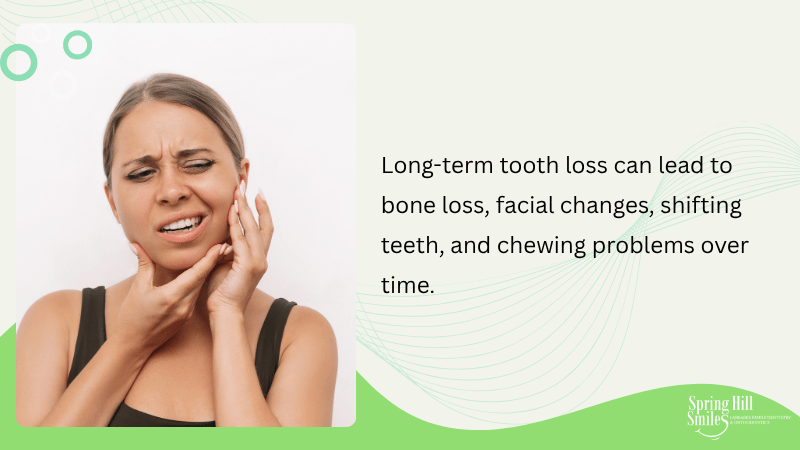
Long-term tooth loss changes how your face looks and how your mouth works. You'll likely notice more wrinkles forming around your mouth as the bone underneath shrinks.
Your cheeks may start to collapse inward, making you look older than you are. This happens because there's less bone structure supporting your facial tissues.
Your remaining teeth may start shifting into the empty spaces. This movement can mess up your bite alignment and make chewing food harder. Some people develop jaw pain or clicking sounds when they open their mouth.
Missing teeth and jaw bone loss can affect your confidence and your ability to eat the foods you enjoy. The longer you wait to replace missing teeth, the more bone you lose and the harder it becomes to restore your oral health.
Evaluating Your Jawbone for Implant Treatment
Your dentist needs to check your jawbone health before moving forward with implants. This involves measuring bone density and volume, using advanced imaging technology, and reviewing your complete oral and medical background.

Bone Density and Volume Assessment
Your jawbone needs enough density and volume to hold an implant securely in place. Think of it like building a fence, you need solid ground to anchor the posts.
Your dentist will measure how much bone you have in the areas where teeth are missing. They look at both the height and width of your jawbone. The bone also needs to be strong enough to support the pressure from chewing and biting.
If you've been missing teeth for a while, your bone may have shrunk. According to research on dental implants and bone loss, 25% of bone loss happens in the first three months after losing a tooth. This makes early evaluation important for planning your treatment.
Diagnostic Tools and 3D Imaging
Modern technology gives your dentist a clear picture of your jawbone structure. A cone beam CT scan creates detailed 3D images of your jaw, showing exactly where bone is strong or weak.
This 3D imaging lets your dentist see things that regular X-rays miss. They can measure bone thickness down to the millimeter. They can also spot any hidden issues like infections or bone damage.
Before dental implant placement can be recommended, a complete evaluation using these tools is needed. The images help your dentist plan the exact placement of your implants and determine if you need bone regeneration procedures first.
Oral Exams and Medical History Considerations
Your oral exam checks more than just your bone. Your dentist examines your gums, remaining teeth, and overall oral hygiene habits.
They'll ask about conditions like periodontitis, which can cause bone loss and affect implant success. Your medical history matters too, certain medications and health conditions can slow healing or affect bone strength.
Your dentist needs to know about diabetes, osteoporosis, smoking habits, and any medications you take. These factors influence how well your body heals and whether bone grafting will work. They also help determine the best type of implant-supported restoration for your situation.
Modern Solutions for Implants with Bone Loss
Dental implant options have evolved significantly to help people who've experienced bone loss over the years. Advanced techniques in bone grafting, sinus procedures, specialized implant types, and full-arch systems make it possible to restore your smile even when significant bone deterioration has occurred.
Bone Grafting and Guided Bone Regeneration
Bone grafting helps rebuild lost bone by adding material to your jaw where density has decreased. The graft material can come from your own body, a donor, or synthetic sources like hydroxyapatite and calcium carbonate.
Guided bone regeneration works alongside traditional bone grafting to direct new bone growth in specific areas. Your dentist places a special membrane over the graft site that encourages your body to grow bone while blocking soft tissue from filling the space.
This approach typically requires delayed implant placement, meaning you'll wait several months for the graft to heal before receiving your implants. The waiting period allows the new bone to integrate properly and create a stable foundation for your dental implants.
Sinus Lift and Ridge Augmentation
A sinus lift procedure becomes necessary when you need upper jaw implants but don't have enough bone height. Your dentist lifts the sinus membrane upward to create space for bone graft material beneath it.
Ridge augmentation addresses bone width rather than height or density. This technique expands the surface area of your jawbone by adding graft material along the ridge where your teeth used to be.
Both procedures fall under advanced implant dentistry techniques that prepare your jaw for successful implant placement. They're especially common for people who've been missing teeth for years and have experienced significant bone deterioration in the upper jaw.
Zygomatic and Mini Dental Implants
Zygomatic dental implants attach to your cheekbone instead of your jawbone, which makes them ideal when you have severe upper jaw bone loss. Your cheekbone doesn't lose density like your jawbone does after tooth loss.
These zygomatic implants are longer than traditional implants and can only be used in your upper jaw. They often eliminate the need for bone grafting entirely.
Mini implants are smaller in diameter than standard implants and require less bone density and surface area. The reduced size means less invasive implant procedures with faster recovery times. They work well for securing partial dentures or implant-supported dentures, though they may not be suitable for every situation.
Full-Arch and All-on-4 Implant Systems
All-on-4 systems use just four strategically placed implants to support a full arch of replacement teeth. The back implants are angled to maximize contact with existing bone and avoid areas where bone loss is most severe.
This approach often works even when you have significant bone deterioration because it takes advantage of the densest bone areas in your jaw. You can receive temporary teeth on the same day as your implant procedures in many cases.
Full-arch implant systems provide an alternative to traditional dentures and can support either fixed or removable prosthetics. They distribute chewing forces across multiple implants, which helps stimulate bone regeneration and prevent further bone loss over time.
Implant Procedure: What to Expect After Years of Tooth Loss
The dental implant procedure involves several stages spread over multiple months. Each phase plays a crucial role in creating a stable foundation for your new tooth replacement.
Implant Post Placement and Healing Timeline
Your dentist will surgically place the implant post into your jawbone during the first procedure. This titanium post acts as an artificial tooth root. The implant surgery typically takes one to two hours per implant, depending on how many you need.
If you've had bone loss from years of missing teeth, your dentist may perform a bone graft first. A dental bone graft needs at least three months to heal before placing the implant post. Larger bone grafts can take nine to 12 months.
After implant surgery, you'll experience some swelling and tenderness for about a week. Your dentist will prescribe pain medication and antibiotics to manage discomfort and prevent infection. You'll need to eat soft foods during the initial recovery period.
Osseointegration and Long-Term Stability
Osseointegration is the process where your jawbone grows around and fuses with the implant post. This creates the strong, permanent foundation needed for your tooth replacement. The process typically takes three to six months.
During this healing period, you cannot put pressure on the implant. Your dentist will schedule regular check-ups to monitor how well the bone is integrating with the post. Successfully completed osseointegration determines whether your dental implant will last for decades.
The success rate for dental implant procedures is high when proper healing occurs. Your age doesn't significantly affect osseointegration, making dental implants possible even years after tooth loss.
Abutment and Final Tooth Replacement Options
Once osseointegration is complete, your dentist attaches an abutment to the implant post. The abutment is a connector piece that holds your final restoration. This minor procedure requires only local anesthesia and has a short recovery time of one to two weeks.
After your gums heal around the abutment, your dentist takes impressions for your final restoration. You have several tooth replacement options depending on how many teeth you're replacing:
Single tooth: A custom crown attaches to the abutment
Multiple teeth replacement options: An implant-supported bridge connects several crowns
Full arch: An implant-supported denture replaces all upper or lower teeth
Your dentist creates your implant-supported restoration to match your natural teeth in color and shape. The final attachment appointment takes about an hour, and you can use your new teeth immediately for eating and speaking.
Success Factors and Maintaining Oral Health with Implants
Getting dental implants is just the first step. Your daily habits and regular dental care play a major role in how long your implants last and whether you can prevent additional jawbone loss.
Preventing Further Bone Loss
Dental implants actually help stop bone loss from getting worse. When you chew with your implants, they send signals through the jawbone just like natural tooth roots do. This keeps your jaw active and healthy.
But implants only work this way if they stay stable. You need to attend all your follow-up appointments so your dentist can check that the implant has bonded properly to your bone. This process takes about three to six months.
If you had bone grafting, protecting that new bone is critical. Avoid smoking completely, as it reduces blood flow and slows healing. Control any health issues like diabetes that can interfere with bone growth. Your dentist might also recommend calcium and vitamin D supplements to support bone strength.
Oral Hygiene and Implant Longevity

Implant success rates remain high when you practice good oral hygiene. Studies show that implants can last 15 years or longer with proper care.
You should brush twice daily with a soft-bristled toothbrush. Use low-abrasive toothpaste to avoid scratching the implant surface. Floss around each implant every day using unwaxed tape or special implant floss.
Get professional cleanings every three to six months. Your hygienist will use special tools that won't damage your implants. They'll also check for early warning signs of problems.
Water flossers work well for cleaning around implants. They flush out food particles and bacteria from hard-to-reach areas. Avoid using metal tools or picks that could scratch the implant surface and create places for bacteria to collect.
Risks: Implant Failure and Gum Disease
The two main threats to your implants are gum disease and implant failure. Peri-implant mucositis is gum inflammation around an implant. If left untreated, it turns into peri-implantitis, which destroys the bone supporting your implant.
Early detection through regular maintenance helps catch these problems before they cause serious damage. Watch for bleeding gums, swelling, or pain around your implants. These are signs you need to see your dentist right away.
Smoking increases your risk of implant failure significantly. It reduces blood flow to your gums and makes infections more likely. Uncontrolled diabetes also raises your risk because it affects healing and makes you more prone to infections.
If you notice your implant feeling loose or shifting, contact your dentist immediately. Quick action can sometimes save a failing implant before it needs removal.
Comparing Tooth Replacement Solutions for Bone Loss Patients
When you've experienced bone loss, understanding how different tooth replacement options stack up against each other helps you make an informed choice. Each solution offers distinct advantages depending on your bone density, budget, and lifestyle needs.
Dental Implants vs. Dentures
Dental implants with bone loss offer the most stable and natural-feeling option for replacing missing teeth. They're surgically placed into your jawbone and stimulate bone growth, which actually helps prevent further deterioration. The implant acts like a natural tooth root and can last a lifetime with proper care.
Dentures, on the other hand, sit on top of your gums and don't provide the same bone stimulation. They're less expensive upfront and don't require surgery, making them appealing if you want a quicker solution. However, dentures can slip when you eat or speak, and they typically need replacement every 5-7 years.
The main tradeoff is permanence versus convenience. While implants require more time and investment initially, they function like your natural teeth. Dentures offer a removable, budget-friendly alternative but won't stop ongoing bone loss in your jaw.
Fixed Bridges and Partial Dentures
Fixed bridges anchor to your existing teeth to replace a missing tooth or several teeth in a row. Your dentist files down the adjacent teeth and uses them as supports for the bridge. This option works well if you have healthy teeth on both sides of the gap and enough bone to support them.
Partial dentures clip onto your remaining natural teeth and can be removed for cleaning. They're similar to full dentures but designed to fill specific gaps in your smile. Partials cost less than bridges and don't require altering your healthy teeth.
Neither option prevents bone loss the way implants do. Bridges can actually put extra stress on the supporting teeth, and partials may contribute to bone deterioration over time since they don't stimulate the jawbone.
Choosing the Right Option for You
Your best tooth replacement option depends on several personal factors. Consider your bone density first, even severe bone loss doesn't automatically rule out implant treatment thanks to bone grafting and specialized implant options.
Key factors to evaluate:
- Budget: Dentures cost less initially, while implants require higher upfront investment
- Timeline: Dentures can be ready in weeks, whereas implant treatment may take several months
- Bone health: Some implant options work even with significant bone loss
- Maintenance: Dentures need daily removal and cleaning, while implants are cared for like natural teeth
- Longevity: Implants can last decades, while dentures typically need replacement every few years
Your overall health matters too. If you smoke or have conditions that slow healing, removable options might be safer choices. Talk with your dentist about your specific situation to find the solution that fits your needs and goals.
Frequently Asked Questions
Many people worry about whether dental implants are still possible after years of missing teeth and bone deterioration. The good news is that solutions exist for most situations, from bone grafting procedures to alternative implant types that work with less bone density.
Can I still get dental implants if I've had bone loss for years?
Yes, you can get dental implants years after losing a tooth and experiencing bone loss. Your dentist will first examine your jawbone to see how much density remains.
Most people who have lived with missing teeth for years will need additional procedures before getting implants. The bone around empty tooth sockets begins to shrink quickly once a tooth is gone. In fact, 25% of bone loss happens in the first three months, and 50% occurs within six months of tooth loss.
Your dentist can rebuild your jawbone strength through various methods. The most common approach involves bone grafting, which adds bone material to your jaw before placing the implant.
What are my options if there isn't enough jawbone for traditional implants?
You have several choices when traditional dental implants aren't possible due to bone loss. Mini dental implants are smaller than regular implants and need less bone density to stay secure.
Zygomatic implants attach to your cheekbone instead of your jawbone. Your cheekbone doesn't lose density like your jawbone does, making this a good option for severe bone loss in your upper jaw.
Dental bridges use your neighboring teeth for support and don't need jawbone integration at all. Dentures offer another removable option that can replace one tooth or many teeth without requiring surgery.
How much do dental implants with bone grafting usually cost?
The cost of dental implants with bone grafting varies widely based on how much bone you need to rebuild. A single implant typically costs between $3,000 and $6,000 without any bone work.
Bone grafting adds $200 to $3,000 per area depending on the amount of bone needed and the type of material used. More complex procedures like sinus lifts can cost $1,500 to $5,000 on top of the implant price.
Your total cost depends on how many teeth you're replacing and what procedures you need. Getting multiple implants at once often reduces the per-tooth cost compared to doing them separately.
What symptoms might suggest bone loss around a dental implant?
Pain or discomfort around your implant can signal bone loss, especially if the implant previously felt fine. You might notice your gums pulling away from the implant or increased sensitivity in the area.
An implant that feels loose or moves slightly is a clear warning sign. Your gums might appear red, swollen, or bleed when you brush around the implant site.
You should see your dentist right away if you notice any of these symptoms. Early treatment can often save the implant and prevent further bone damage.
What causes bone loss around dental implants, and how can it be prevented?
Poor oral hygiene is the main cause of bone loss around existing implants. Bacteria buildup leads to infection that breaks down the bone supporting your implant.
Smoking reduces blood flow to your gums and bones, which slows healing and weakens bone over time. Grinding your teeth puts too much pressure on implants and can damage the surrounding bone.
You can prevent bone loss by brushing twice daily and flossing around your implants carefully. Visit your dentist every six months for professional cleanings and checkups. Quitting smoking greatly improves your chances of keeping your implants healthy long-term.
Do Medicare or other insurance plans help cover dental implants for seniors?
Original Medicare does not cover dental implants or most other dental procedures. Medicare only pays for dental care that's medically necessary as part of a covered health service, like jaw reconstruction after an accident.
Some Medicare Advantage plans include limited dental coverage that might help with implants. You'll need to check your specific plan details to see what's covered.
Many dental insurance plans treat implants as cosmetic and don't provide coverage. Some plans may cover part of the cost if implants are medically necessary. Dental discount plans can reduce your out-of-pocket costs by 10% to 60% at participating dentists.
.png)
.png)





.webp)