

.png)
.png)
.png)
.png)

.png)
If you've ever caught yourself covering your mouth when you laugh, you already know how much a smile affects daily confidence.
Porcelain veneers can be a wonderful way to change that, but they aren't the right fit for every smile or every situation. Before you book a consultation, it helps to understand what makes someone a strong candidate.
The good news is that figuring this out doesn't require guesswork. A healthy foundation of gums, enamel, and a stable bite matters just as much as the cosmetic concerns you want to fix. An experienced cosmetic dentistry provider will look at both sides of that equation before recommending porcelain veneers in Spring Hill.
This article walks through the signs that point toward veneers, the health checks your dentist will run first, and the alternatives worth knowing about if veneers aren't your best starting point. If you live near Spring Hill, TN, and you're weighing your options for a smile makeover, this is the honest, practical look you need before your veneer consultation.
Key Takeaways
- Veneers work best for cosmetic concerns like stains, chips, gaps, and minor unevenness, once your teeth and gums are healthy.
- Enamel thickness, bite stability, and grinding habits all affect whether veneers will last.
- A good cosmetic dentist will tell you honestly if another treatment, like whitening, Invisalign, or bonding, should come first.
Signs Veneers May Fit Your Smile Goals
Veneers tend to work best when your main concerns are about the way your teeth look, not how they function. If your teeth are healthy and stable but you're unhappy with their color, shape, or spacing, you're likely a strong candidate for porcelain veneers.
Porcelain veneers are thin shells of dental porcelain bonded to the front of your teeth. They cover imperfections like stains, chips, and gaps, giving you a smile makeover without changing the healthy tooth structure underneath. Composite veneers offer a similar idea using a different material, often at a lower cost but with a shorter lifespan.
Which Cosmetic Concerns Can Veneers Address?
Veneers work well for a specific set of cosmetic goals. They can cover severe discoloration that whitening treatments can't fully correct, close small gaps between teeth, reshape misshapen or uneven teeth, and hide cracked teeth that aren't structurally weak. Many patients in Spring Hill choose veneers as part of a full smile transformation when several of these issues show up together.
When Is a Single Veneer Enough?
A single veneer can be the right call when only one tooth is chipped, discolored, or oddly shaped compared to its neighbors. This happens often after an injury or with a tooth that simply grew in differently. Your cosmetic dentist will match the shade and shape of the single veneer carefully so it blends in with your natural teeth.
Can Veneers Create the Appearance of Straighter Teeth?
Veneers can visually straighten teeth with minor misalignment, though they don't move teeth like braces do. Dentists sometimes call this "instant orthodontics" because a well-designed veneer can mask small rotations or slight overlap. This only works for mild cases; more noticeable misalignment usually needs orthodontic treatment first.
Health and Bite Factors a Dentist Must Check
Your gums, enamel, and bite all need to be in good shape before porcelain veneers can be placed safely. Skipping this step is one of the biggest reasons veneers fail early or don't look right once bonded.
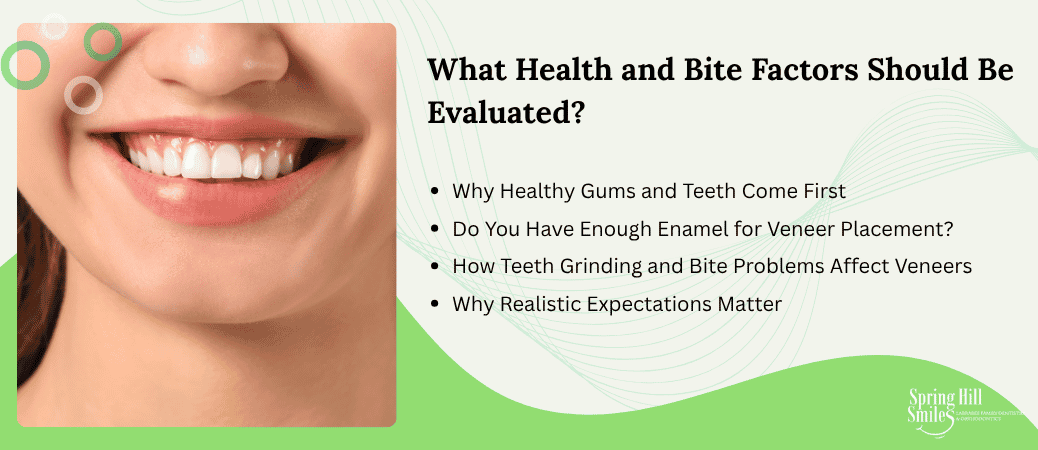
Why Healthy Gums and Teeth Come First
Healthy gums and teeth are the starting point for any successful veneer placement. Gum disease and tooth decay both need to be treated before veneers go on, because bonding porcelain over an infection or cavity only hides a problem that will keep getting worse. Good oral hygiene, including regular brushing, flossing, and checkups, keeps your foundation strong enough to support veneers for years.
Do You Have Enough Enamel for Veneer Placement?
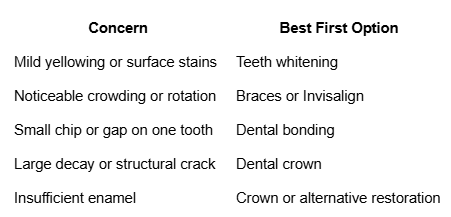
Veneer placement requires a thin layer of enamel to be removed so porcelain can bond securely to your tooth. Patients with sufficient enamel handle this process well. Patients with insufficient enamel, often from grinding, acid erosion, or aggressive brushing over the years, may not have enough tooth structure left to support a veneer safely. In these cases, your dentist might recommend crowns or a different approach that doesn't rely on healthy enamel underneath.
How Teeth Grinding and Bite Problems Affect Veneers
Teeth grinding, also called bruxism, puts extra pressure on veneers and can chip or crack them over time. Bite problems, like an uneven bite or teeth that hit unevenly when you chew, create the same risk. If your dentist finds signs of grinding or bite correction needs, they may recommend a custom nightguard or night guard to protect your new veneers while you sleep. Getting this sorted out first protects your investment and your natural teeth underneath.
Why Realistic Expectations Matter
Realistic expectations make the difference between loving your new smile and feeling disappointed. Veneers can dramatically improve color, shape, and symmetry, but they won't make teeth perfectly identical or change your bite. A good cosmetic dentist will walk you through mockups or photos so you know what your results will actually look like before treatment begins.
When Another Treatment May Be Better
Veneers aren't always the fastest or most affordable way to reach your smile goals. Depending on what's bothering you about your teeth, teeth whitening, orthodontic treatment, dental bonding, or crowns might solve the problem with less cost or a less invasive procedure.
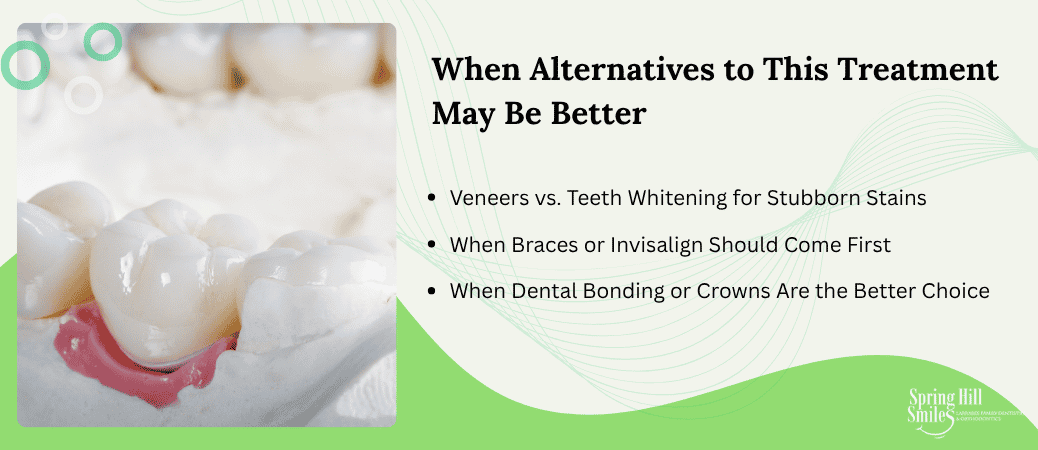
Veneers vs. Teeth Whitening for Stubborn Stains
Teeth whitening works well for surface stains and mild yellowing, but it can't fix severe discoloration caused by old fillings, medication use, or damage to the inner tooth. In those cases, porcelain veneers cover the stain completely instead of trying to lighten it. If your teeth are simply darker than you'd like but otherwise healthy and evenly colored, whitening is the simpler, less expensive first step.
When Braces or Invisalign Should Come First
Braces or Invisalign should come first when misalignment goes beyond what a veneer can visually mask. Veneers can create the illusion of straighter teeth for minor misalignment, but noticeable crowding, rotation, or bite issues need actual tooth movement. Skipping orthodontic treatment and going straight to veneers on badly misaligned teeth can lead to an unnatural-looking result and added strain on your bite.
If you're unsure which category you fall into, this comparison of how different orthodontic treatments deliver faster results can help you weigh your options. Another guide on how to tell if you need braces is worth reading before your consultation.
When Dental Bonding or Crowns Are the Better Choice
Dental bonding using composite resin works well for small chips, minor gaps, or a single imperfect tooth, and it costs less than a veneer. Same day dental crowns become the better choice when a tooth has significant decay, a large filling, or a crack that affects its strength, since crowns cover the entire tooth rather than just the front surface.
What to Expect From a Spring Hill Veneer Consultation
At Spring Hill Smiles, a veneer consultation starts with an evaluation of your oral health, smile goals, and treatment needs before a plan is recommended. Your dentist will walk you through your options and each step of the process so you can make an informed decision about your smile.
How Your Cosmetic Dentist Plans Your Smile Design
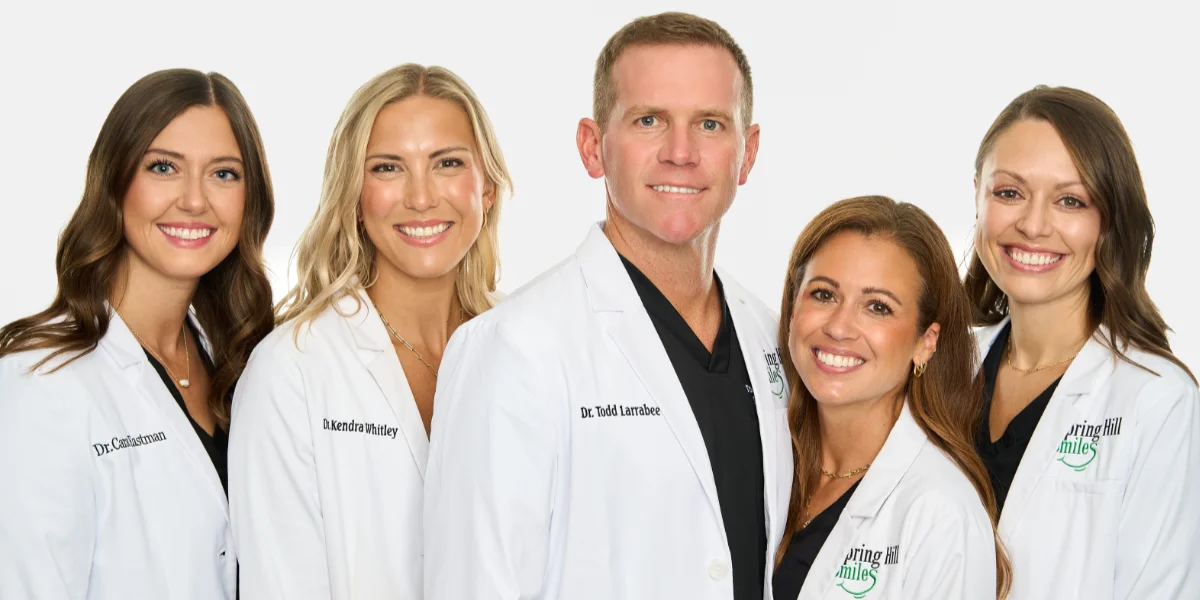
Smile design begins with photos, models, or digital scans of your current smile. Dr. Kendra Whitley, who focuses on cosmetic and restorative care at Spring Hill Smiles, can use this information to plan the shape, size, and shade of your veneers while considering your facial features and the results you want to achieve.
This planning stage also helps set realistic expectations, giving you a clearer idea of how your new smile may look before treatment begins.
From Tooth Preparation to Temporary Veneers
Tooth preparation involves removing a thin layer of enamel from each tooth getting a veneer. Temporary veneers are placed right after, so you're not walking around with prepared teeth while your permanent set is custom made in a dental lab.
How Permanent Veneers Are Bonded and Protected
Permanent veneers are bonded to your teeth using a dental adhesive that's hardened with a curing light, creating a strong connection between the porcelain and your natural tooth.
Once bonded, the porcelain functions as a durable outer shell that resists stains and holds its shape well.
How Much Do Veneers Cost and What Payment Options Are Available?
Veneer pricing depends on the material, number of teeth being treated, and your specific treatment plan. Ask for a personalized cost estimate during your consultation and discuss available payment or financing options with the dental team.
Choosing a Veneer Plan That Protects Your Natural Smile

The best veneer plan protects what's already healthy about your smile while improving the parts that bother you. That starts with healthy gums and sufficient enamel, since both are needed for a strong, lasting bond between porcelain and tooth.
Good oral hygiene before and after treatment keeps your results looking their best for years. If you grind your teeth, your dentist may recommend a nightguard to help protect your veneers and natural teeth. Pair all of this with realistic expectations about what a smile makeover can and can't change, and you'll walk into treatment with clarity instead of uncertainty.
Porcelain veneers work best as one piece of a bigger picture: a mouth that's healthy first, and beautiful because of it.
Frequently Asked Questions
What disqualifies you from getting porcelain veneers?
Active gum disease, untreated cavities, or insufficient enamel can disqualify you from getting porcelain veneers until those issues are treated. Severe teeth grinding without a protective plan in place is another common reason dentists pause or adjust the treatment plan. Most of these issues can be resolved first, allowing veneers later.
Can I get veneers if I have cavities or gum disease?
Cavities and gum disease need to be treated before porcelain veneers can be placed safely. Bonding a veneer over a tooth with active decay or inflamed gums can trap the problem and let it worsen underneath. Your dentist will typically recommend addressing these issues first, then reevaluating your candidacy once your mouth is healthy.
Are veneers a good option if I grind my teeth at night?
Veneers can still work for people who grind their teeth, but a custom nightguard becomes part of the plan. Grinding puts extra stress on porcelain and can lead to chips or cracks without protection. Your dentist will likely fit you for a night guard before or shortly after your veneers are placed.
Can veneers fix gaps and slightly crooked teeth without braces?
Veneers can visually close small gaps and mask minor misalignment without braces. This works well for mild cases, but noticeable crowding or rotation usually needs orthodontic treatment first for a natural-looking, stable result. Your dentist can tell you which category your smile falls into during a consultation.
How much does a full set of veneers cost in Tennessee?
Veneer pricing varies based on the number of teeth, material used, and your individual treatment needs. A personalized estimate during your consultation is the best way to understand your expected cost and available payment options.
What should I know before getting porcelain veneers in Spring Hill?
Before getting veneers in Spring Hill, TN, know that your dentist will check your gum health, enamel thickness, and bite stability first. Ask about realistic outcomes, how long your veneers should last, and what aftercare looks like, including a nightguard if you grind your teeth. A transparent consultation should leave you with a clear plan and no pressure to decide on the spot.
.png)
.png)




.webp)